Briefing · Listenseattle
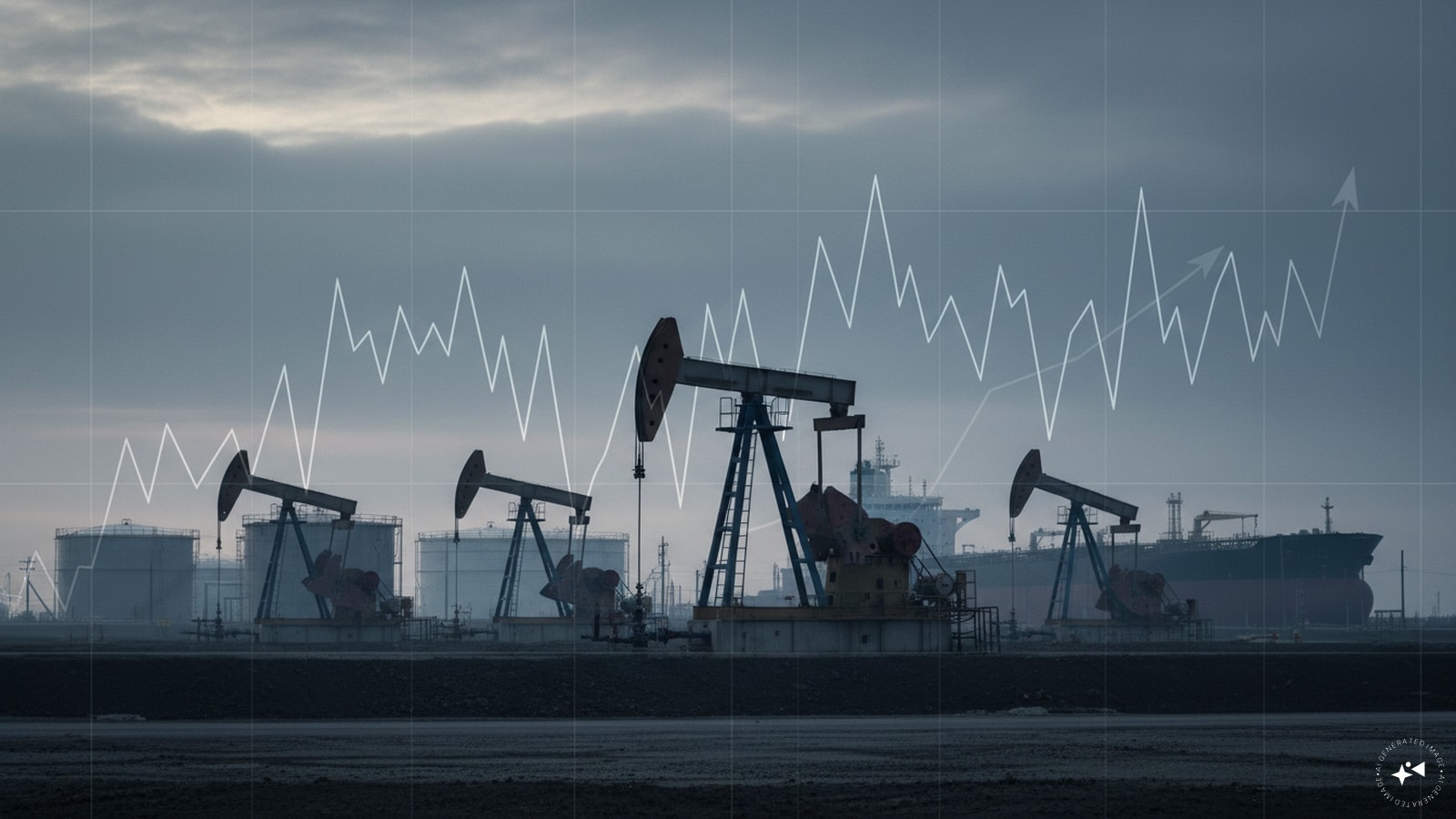
Oil prices swung on Wednesday November 4, after two days of declines, as traders tried to read mixed signals on the US-Iran peace talks. Brent crude traded at $104.27 a barrel in early Asian hours, having closed below $104 on Tuesday. The US West Texas Intermediate (WTI) hovered near $97 a barrel after moving through a range of roughly $5 on Tuesday.
The choppy trade follows a sharp reversal earlier in the week as Brent plunged 7.6% on Monday, its steepest fall in more than three months, after Washington and Tehran signalled they were willing to pursue talks in the ninth month of the West Asia war. On Tuesday, the benchmark opened steady at $104.32 but climbed as high as $107 before easing back. Also Read: Brent crude may stay between $95 and $115, says Geoffrey Dennis Diplomacy supplied most of the uncertaint, a Bloomberg report that said both countries are studying fresh proposals from mediators on how to bridge their differences.
Iran's national security chief dampened the mood, however, writing on X that the US response so far was "not satisfactory". The talks follow weeks of rising tension, in which Iran stepped up attacks on ships in the Strait of Hormuz and US President Donald Trump threatened renewed strikes after the midterm elections. Trump has since struck a more restrained tone as he told the Financial Times that Washington has no immediate plans to hit Iran.
"We're locked and loaded if we need to go, but there may be no reason for it," he said. Physical markets also seemed to be pressing on prices. As Gulf crude exports recover, West Asian oil metrics show near-term supply outpacing demand for the first time since July, and North Sea cargo prices have softened.
Saudi Aramco chief executive Amin Nasser said on post-earnings call on Tuesday that the company will maximise output this quarter and lift shipments from the near-prewar levels it reached in October. Samiran Chakraborty, chief economist at Citi India, told CNBC-TV18 that the bank expects the conflict to end by late 2026 or early 2027. That outcome would ease shipping disruption through Hormuz and trim the freight and insurance costs now built into crude.
Also Read: Goldman raises oil price forecast for December and 2027. Here's why Geoffrey Dennis, an independent emerging-markets commentator, urged caution about expecting a lasting slide after Trump's remarks. He believes Brent could stay between $95 and $115 a barrel unless the peace effort makes much more headway.
For now, crude remains volatile as Brent has gained more than 70% this year as the war disrupted Arabian Gulf flows and unsettled energy markets, and traders seemed to be weaiting for a firmer diplomatic signal before committing to a direction. With Agency Inputs Tags
Source: CNBC TV18