Briefing · Listenseattle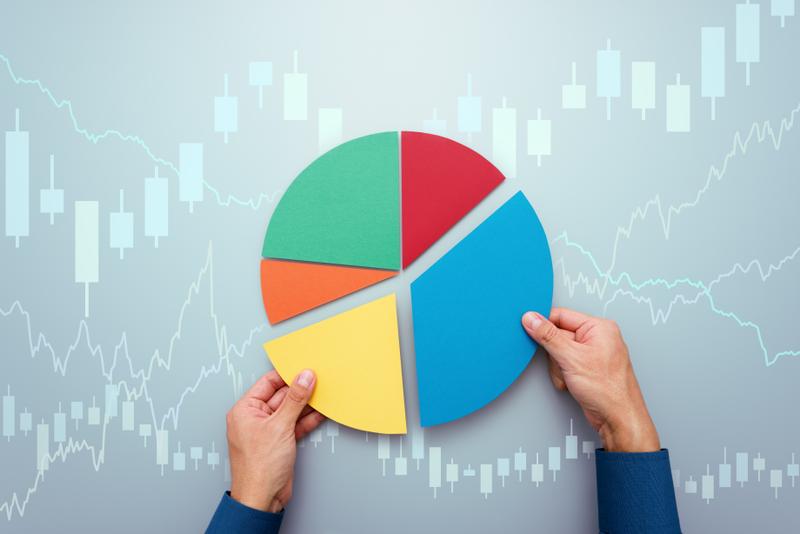
The S&P 500 ( ^GSPC +0.51% ) is roughly 1% below its record close as I write, and that sort of backdrop can make investing fresh money uncomfortable. No one wants to buy near a peak. But over a 20-year horizon, I'd say the bigger mistake is usually never investing the money at all.
If I were putting $10,000 to work with no plans to touch it for two decades, I'd split it among three Vanguard index funds: one that holds the S&P 500 , one that tilts toward dividend payers, and one that leans into growth stocks. All told, their fees would run about $3 a year on the full position. Here's a closer look at each fund -- and how I'd divide the money.
Image source: Getty Images. 1. Vanguard S&P 500 ETF The core holding is the Vanguard S&P 500 ETF ( VOO +0.54% ) . The fund owned 505 stocks as of Aug. 31, and it charges an expense ratio of 0.03%, so nearly all of the index's return reaches the investor.
Shares of the fund cost around $708 as of this writing, just under their own high. The fund has averaged roughly 15% annually over the past decade. And it gained around 20% in the year through August.
No one should bank on that pace continuing for another 20 years. Today's Change ( 0.54 %) $ 3.80 Current Price $ 710.79 In other words, don't buy this fund to beat anything. Its job is to deliver the market's return, whatever that ends up being, and to do it for almost nothing.
Warren Buffett has made the same case. The instructions he has described for his estate call for 90% of the cash he leaves his wife to go into a low-cost S&P 500 index fund, and he suggested Vanguard's. 2. Vanguard High Dividend Yield ETF For the income tilt, I'd choose the Vanguard High Dividend Yield ETF ( VYM +0.48% ) .
The fund follows the FTSE High Dividend Yield Index, a group of higher-yielding U.S. stocks that leans heavily toward value stocks . It recently owned 603 of them, costs 0.04%, and had a yield of around 2.2% at the end of August -- more than twice the S&P 500 fund's roughly 1%. Granted, dividend funds are normally seen as the slow siblings, and for long periods this one has been.
It returned around 12% per year in the last decade, far below the S&P 500 fund's 15%. But leadership rotates. Showing how fast the order can flip, the dividend fund returned around 21% for the 12 months through August, edging the S&P 500 fund and easily topping the growth fund.
Today's Change ( 0.48 %) $ 0.76 Current Price $ 157.68 That's just the job I'd hire it to do. It holds hundreds of established dividend payers that can lead when the market's growth stocks cool off. 3. Vanguard Morningstar Growth ETF The third leg is the Vanguard Morningstar Growth ETF ( VUG +0.54% ) , known until late July as the Vanguard Growth ETF. (Vanguard renamed the fund after Morningstar bought CRSP, the index provider behind it.
The strategy didn't change.) The fund owns only 147 large-cap growth stocks , and like the S&P 500 fund, it costs 0.03%. Its record is the best of the three -- an average annual return of almost 18% over the last decade. Still, the 12 months through August showed the other side of that concentration.
The fund returned roughly 16% (the lowest of the three) while dividend payers led the market instead. Today's Change ( 0.54 %) $ 0.49 Current Price $ 90.94 Concentrated growth is what gives the fund its long-term record, and it's also why I wouldn't make it the whole portfolio. How would I split the money?
I'd put $5,000 into the S&P 500 fund and $2,500 into each of the other two. Half the money just takes whatever the market gives. The rest tilts a quarter toward income and a quarter toward growth, so the portfolio always holds some of what's working without me guessing which style leads next.
Growth could stay ahead for another decade, or the dividend payers might take another turn leading, like they did for much of the last year. But I wouldn't have to get either right. The 20-year part of the plan arguably counts as much as the funds.
Even at 7% a year, well below what these funds returned in the last decade, $10,000 compounds to almost $39,000 over 20 years. Sure, a two-decade hold will include bear markets, and all three funds would probably drop together in them. The plan doesn't depend on avoiding those stretches, though.
It depends on not selling during them. And at about $3 a year in combined fees, almost everything the three funds earn over those two decades stays with the investor.
Source: The Motley Fool